
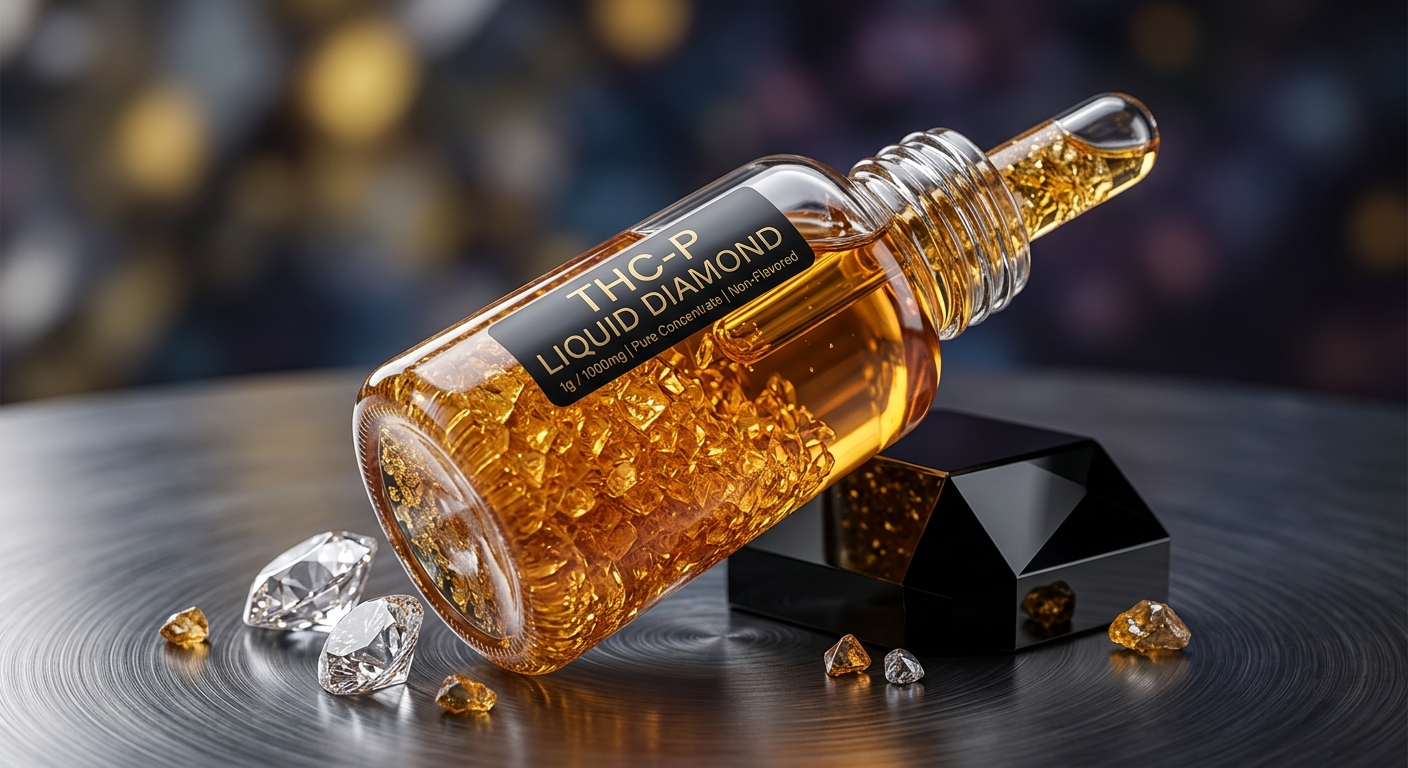
The cannabinoid market has introduced many newer terms that can be difficult to interpret. “THC-P liquid diamond” is one such phrase, combining the name of an emerging cannabinoid with a descriptive product term.
What Is THCP?
THCP, also written as THC-P, is the common abbreviation for tetrahydrocannabiphorol, a cannabinoid identified through scientific research.
It is structurally related to delta-9 THC but is a separate compound. Research into THCP is still developing, so claims about its effects should be approached carefully.
What Does “Liquid Diamond” Refer To?
The expression THC-P liquid diamond is generally a product or marketing term rather than a universally standardized scientific classification.
Different manufacturers may use similar terminology for different formulations. This makes ingredient information and laboratory documentation particularly important.
Why Research Matters
Newer cannabinoids often have less extensive research available than better-known compounds. Laboratory findings can provide valuable information, but they should not automatically be interpreted as proof of specific consumer effects or long-term safety.
Importance of Product Testing
Testing may help establish the cannabinoid profile of a product and can sometimes identify contaminants or unexpected substances.
Reliable documentation should clearly identify the tested product rather than relying on a generic laboratory claim.
Regulatory Differences
The legal status of THCP-related products can differ significantly depending on location. Laws and regulations can also change as authorities respond to emerging cannabinoid products.
For that reason, availability does not necessarily mean that a product is legal everywhere.
Final Thoughts
THC-P liquid diamond is best understood as a product description associated with an emerging cannabinoid category. The most useful approach is to focus on verified ingredients, laboratory information, safety warnings, and current regulations rather than relying on terminology alone.
 tarek tarek